
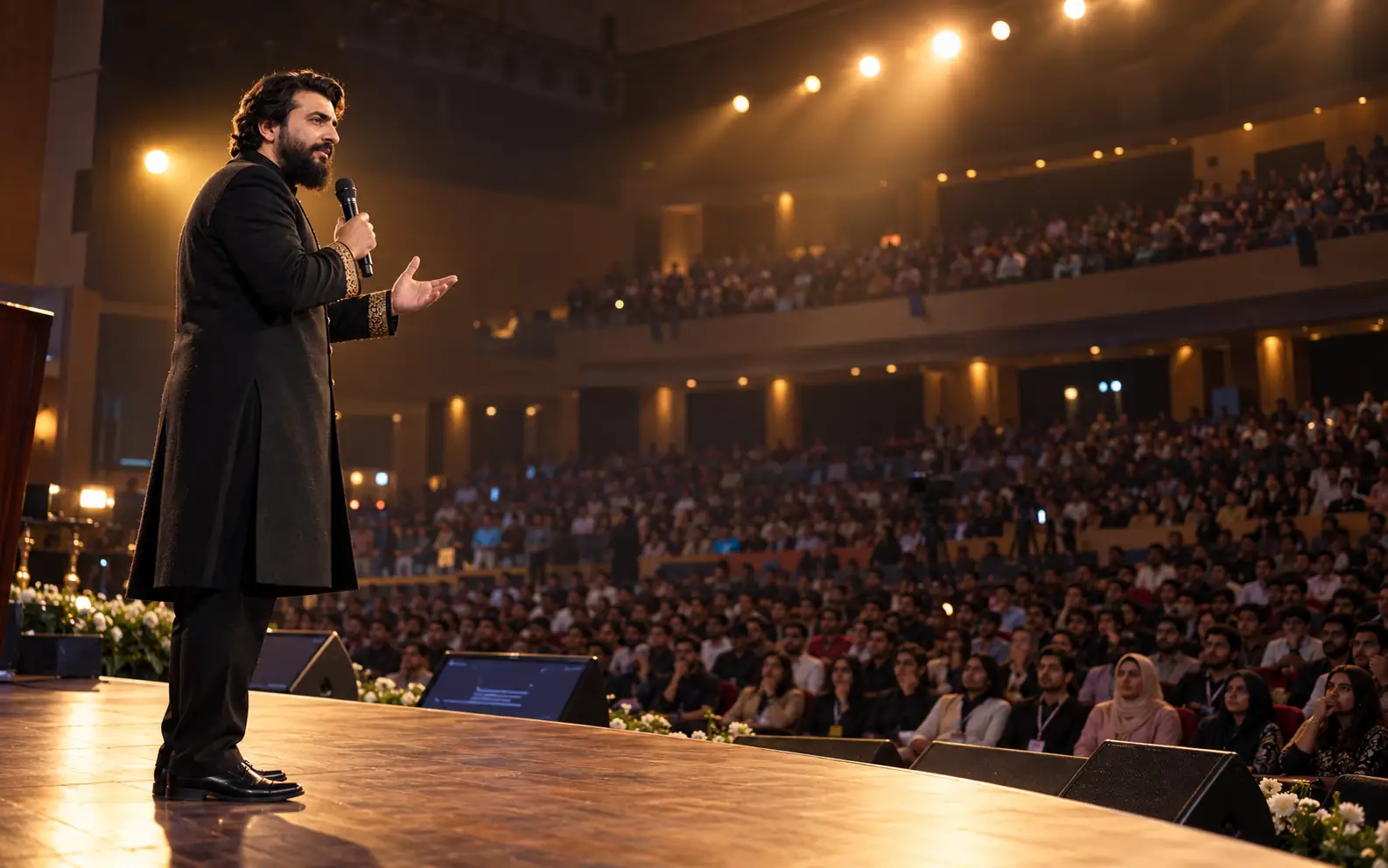
Organizing a successful motivational seminar for students requires more than booking a speaker and arranging a venue. Schools, colleges and universities need to understand their students’ needs, select relevant topics and create an experience that encourages learning, reflection and personal development.
A motivational seminar for students can provide an opportunity to explore leadership, communication, confidence, discipline and future goals. When planned thoughtfully, these events can complement academic education and encourage students to take a more active role in their personal and professional development.
For educational institutions in Pakistan and beyond, the key is to connect inspiration with practical guidance. Students should leave with ideas they can apply to their studies, relationships, responsibilities and future careers.
This guide explains how to plan a student motivational seminar, choose the right speaker, develop an engaging agenda and evaluate the event’s outcomes.
How Do You Organize a Motivational Seminar for Students?
To organize a successful motivational seminar for students, define the event’s objectives, understand the audience, select a suitable speaker, choose relevant topics, plan the venue and schedule, encourage student participation and collect feedback afterward.
The following steps provide a practical framework for schools, colleges, universities and event organizers.
What Is a Motivational Seminar for Students?
A motivational seminar for students is an educational event designed to encourage personal growth, positive habits, leadership and purposeful action.
These seminars may feature a motivational speaker, educator or mentor who discusses topics relevant to students’ academic experiences, personal challenges and future ambitions.
Depending on the audience and event objectives, sessions can cover:
- Confidence and communication skills
- Leadership and teamwork
- Goal-setting and personal discipline
- Career direction and future planning
- Resilience and learning from setbacks
- Character development and ethical responsibility
- Islamic values and purposeful living
Unlike a conventional classroom lesson, a motivational seminar often uses relatable examples, discussion and practical suggestions to encourage students to reflect on their choices and identify opportunities for improvement.
The aim is not simply to create temporary excitement. A well-planned session should give students useful ideas and realistic actions they can apply in everyday life.
Why Are Motivational Seminars Important for Students?
Academic education provides essential knowledge, but students also benefit from developing interpersonal skills, personal responsibility and the ability to make thoughtful decisions.
Motivational seminars can complement classroom learning by addressing these areas in an engaging format.
1. Building Confidence and Communication Skills
Confidence helps students express their ideas, participate in discussions and approach unfamiliar situations with greater willingness.
A motivational speech for students can explore how preparation, practice and constructive feedback contribute to confidence.
Speakers may also discuss active listening, respectful communication and the importance of learning from mistakes.
2. Developing Leadership and Teamwork
Leadership skills are useful in student societies, group projects, community initiatives and future workplaces.
A student leadership seminar can introduce accountability, teamwork, decision-making and responsible leadership.
Students can learn that leadership is not only about holding a position. It also involves listening to others, supporting a team and taking responsibility for decisions.
3. Encouraging Goal-Setting and Discipline
Students often have ambitions but may struggle to translate them into consistent action.
A seminar can introduce practical approaches to setting achievable goals, prioritizing tasks and building productive habits.
Breaking larger goals into manageable steps can help students track their progress and recognize areas where they need additional support.
4. Preparing Students for Future Challenges
The transition from education to professional life involves new responsibilities and decisions.
Motivational sessions can encourage students to explore their strengths, develop useful skills and approach setbacks constructively.
When career-related guidance is needed, a motivational seminar can complement specialist career counselling rather than replace it.
Step-by-Step Guide to Planning a Successful Student Seminar
Step 1: Define Clear Objectives
Start by identifying what the institution wants students to gain from the event.
Possible objectives include:
- Improving confidence and communication
- Introducing leadership principles
- Encouraging personal discipline
- Promoting career awareness
- Strengthening ethical responsibility
- Supporting personal and spiritual development
Choose a small number of objectives that can realistically be addressed within the available session time.
Clear goals also help organizers evaluate whether the event delivered useful outcomes.
Step 2: Understand Your Audience
The needs of school students may differ significantly from those of university students or recent graduates.
Consider the participants’ age, educational level, interests and the challenges they are currently facing.
For example, school seminars might focus on positive habits, teamwork and confidence. University sessions may explore leadership, career planning, communication and personal responsibility.
Understanding the audience allows the speaker to choose appropriate examples, language and activities.
Step 3: Choose the Right Motivational Speaker
Selecting a suitable motivational speaker for students is an important part of event planning.
Institutions should consider the speaker’s relevant experience, communication style, subject knowledge and ability to adapt content to the audience.
Before confirming a booking, discuss:
- The event’s objectives and central theme
- The audience’s age group and expected attendance
- Preferred language, such as English, Urdu or bilingual delivery
- Session duration and presentation format
- Opportunities for audience questions
- Venue, date and technical requirements
Ask the speaker how the presentation will connect with students’ real experiences and what practical lessons they can expect to take away.
For schools, colleges and universities looking for a speaker whose work includes personal development, leadership and Islamic guidance, explore Shaykh Atif Ahmed’s Motivational Speaker services.
Step 4: Select Relevant Seminar Topics
The topic should address the needs of the intended audience rather than simply follow a popular theme.
Potential topics include:
Personal development: Self-awareness, discipline, confidence and goal-setting.
Leadership: Teamwork, accountability, communication and decision-making.
Career direction: Exploring interests, building relevant skills and preparing for professional opportunities.
Productivity: Prioritization, time management and developing consistent habits.
Character and values: Integrity, responsibility, respect and purposeful living.
Islamic motivation: Connecting faith, good character and personal responsibility with everyday decisions.
Select one main theme and a few supporting points to keep the presentation focused.
Step 5: Plan the Venue and Event Logistics
The event format should match the audience size, budget, location and learning objectives.
Schools and universities may choose an auditorium, classroom, conference hall or online session.
Before the event, confirm:
- Venue and seating arrangements
- Date, start time and duration
- Audio, microphone and presentation equipment
- Registration and audience entry arrangements
- Speaker requirements and contact details
- Session schedule and question-and-answer time
Communicate the arrangements to the speaker and organizing team in advance.
Step 6: Encourage Student Participation
A seminar becomes more engaging when students have opportunities to interact with the content.
Depending on the audience, organizers can include a question-and-answer session, guided reflection, small-group discussion or a short activity related to the topic.
These elements help students connect general ideas with their own goals and experiences.
Participation should remain appropriate for the students’ age group, the available time and the event’s educational objectives.
Step 7: Collect Feedback and Evaluate Outcomes
Attendance alone does not establish whether a seminar was successful.
Organizers can use short surveys, feedback forms or follow-up discussions to understand what participants found useful.
Consider asking:
- Which idea or lesson was most valuable?
- What skill would you like to develop further?
- What action will you take after the seminar?
- Which topics would you like to explore in future sessions?
Reviewing feedback can help institutions improve future motivational events and choose more relevant topics.
Sample Motivational Seminar Agenda for Students
A clear agenda helps organizers allocate time and maintain the event’s focus.
The following is an illustrative 90-minute format that can be adjusted to suit the audience and speaker.
| Session | Duration |
| Welcome and introduction | 10 minutes |
| Main motivational talk | 30 minutes |
| Practical examples and reflection | 15 minutes |
| Interactive discussion or activity | 15 minutes |
| Student questions and answers | 15 minutes |
| Closing remarks and feedback | 5 minutes |
| Total | 90 minutes |
The exact schedule should be agreed upon with the speaker. Some events may need shorter sessions, additional activities or a different format.
Best Motivational Seminar Topics for Students
Personal Development and Self-Discovery
Students can benefit from learning how to identify their strengths, set meaningful goals and develop habits that support progress.
Possible themes include confidence, self-awareness, personal responsibility and learning from mistakes.
Leadership and Character Building
Leadership sessions can explore teamwork, accountability, ethical decision-making and effective communication.
These topics are particularly relevant for student representatives, society members and participants preparing for professional responsibilities.
Career Planning and Future Readiness
Career-focused sessions can encourage students to explore their interests, understand the importance of skill development and make more informed decisions about their future.
Such seminars can introduce useful questions and planning techniques while directing students toward specialist career guidance when appropriate.
Productivity and Time Management
Students often balance academic work, examinations, extracurricular activities and personal commitments.
A productivity-focused session can introduce prioritization, realistic scheduling, reducing distractions and maintaining consistent study habits.
Islamic Values and Purposeful Living
For institutions seeking a faith-based perspective, motivational talks can connect personal development with Islamic values such as honesty, patience, responsibility and service to others.
These sessions can encourage students to reflect on their intentions, character and contribution to society while pursuing their educational and professional ambitions.
Motivational Seminars for Schools, Colleges and Universities
Different educational institutions may have different priorities when planning a motivational event.
Schools
School seminars can focus on confidence, teamwork, positive habits, respectful behavior and age-appropriate personal development.
Content should be suitable for students’ maturity levels and educational needs.
Colleges
College events can address independence, communication, personal responsibility, academic goals and preparation for future opportunities.
The topics should reflect students’ transition into higher education or professional life.
Universities
University motivational events can explore leadership, career direction, productivity, ethical decision-making and purposeful growth.
These sessions can complement academic learning by encouraging students to consider how their choices and skills may contribute to their future professions and communities.
How to Make a Student Motivational Event More Meaningful
A successful event should connect inspiration with practical learning.
Set Realistic Expectations
A single seminar cannot solve every academic, personal or professional challenge. Its purpose should be to introduce useful ideas and encourage students to take constructive next steps.
Provide Opportunities for Reflection
Encourage students to identify one or two lessons they can apply after the event.
A short reflection activity can help them turn general messages into specific goals.
Connect the Seminar With Further Learning
Where appropriate, institutions can follow up with student leadership activities, mentoring opportunities, personal development workshops or additional educational sessions.
Follow-up activities can help reinforce ideas introduced during the seminar.
Why Consider Shaykh Atif Ahmed for a Student Motivational Seminar?
Shaykh Atif Ahmed is a Pakistani Islamic scholar and motivational speaker whose work focuses on personal development, leadership, character building and purposeful living.
His Motivational Speaker service is intended for audiences that include schools, colleges, universities, youth events, organizations and communities.
Depending on an event’s objectives, organizers can explore themes related to personal growth, leadership with integrity, youth development and Islamic values. The appropriate topic, language and delivery format should be discussed with the team before booking.
Schools, colleges and universities planning an event can visit the official Shaykh Atif Ahmed Motivational Speaker page to review the service and submit an enquiry.
When making an inquiry, share the institution’s name, proposed date, audience type, expected attendance, preferred topic and event location. Providing these details can help the team understand the requirements and discuss a suitable arrangement.
Frequently Asked Questions
1. What is the purpose of a motivational seminar for students?
A motivational seminar encourages students to reflect on their goals, explore personal development and learn practical approaches to confidence, leadership, communication and future planning.
2. How do you organize a motivational seminar for students?
Define the objectives, understand the audience, select a suitable speaker, choose relevant topics, plan the venue and schedule, encourage student participation and collect feedback after the event.
3. What are the best topics for a student motivational seminar?
Suitable topics include leadership, confidence, communication, personal discipline, career planning, productivity, character development and purposeful living. The best choice depends on the students’ needs and the institution’s objectives.
4. How do you choose a motivational speaker for students?
Consider the speaker’s relevant experience, audience suitability, communication style, topic expertise and ability to connect the presentation with practical learning outcomes.
5. How long should a motivational seminar for students last?
The duration depends on the audience, topic and event objectives. Organizers should agree on the schedule with the speaker and allow appropriate time for the main presentation, audience interaction and questions.
6. Can a motivational seminar include Islamic teachings?
Yes. Where appropriate to the audience and institution, a seminar can incorporate Islamic values, character development, personal responsibility and purposeful living alongside practical personal development.
7. How can a school or university book Shaykh Atif Ahmed?
Schools, colleges, universities and event organizers can visit the Motivational Speaker service page to review the service and submit an enquiry with their event requirements.
Conclusion
A successful motivational seminar for students begins with a clear purpose, a relevant topic and an understanding of the audience.
By selecting a suitable speaker, planning an engaging agenda, encouraging student participation and collecting feedback, educational institutions can create a meaningful learning experience that complements academic education.
Whether the focus is leadership, confidence, career direction or Islamic values, the aim should be to help students turn useful ideas into realistic actions.
If your school, college or university is planning a motivational seminar, explore Shaykh Atif Ahmed’s Motivational Speaker services to discuss a session suited to your audience and event objectives.
